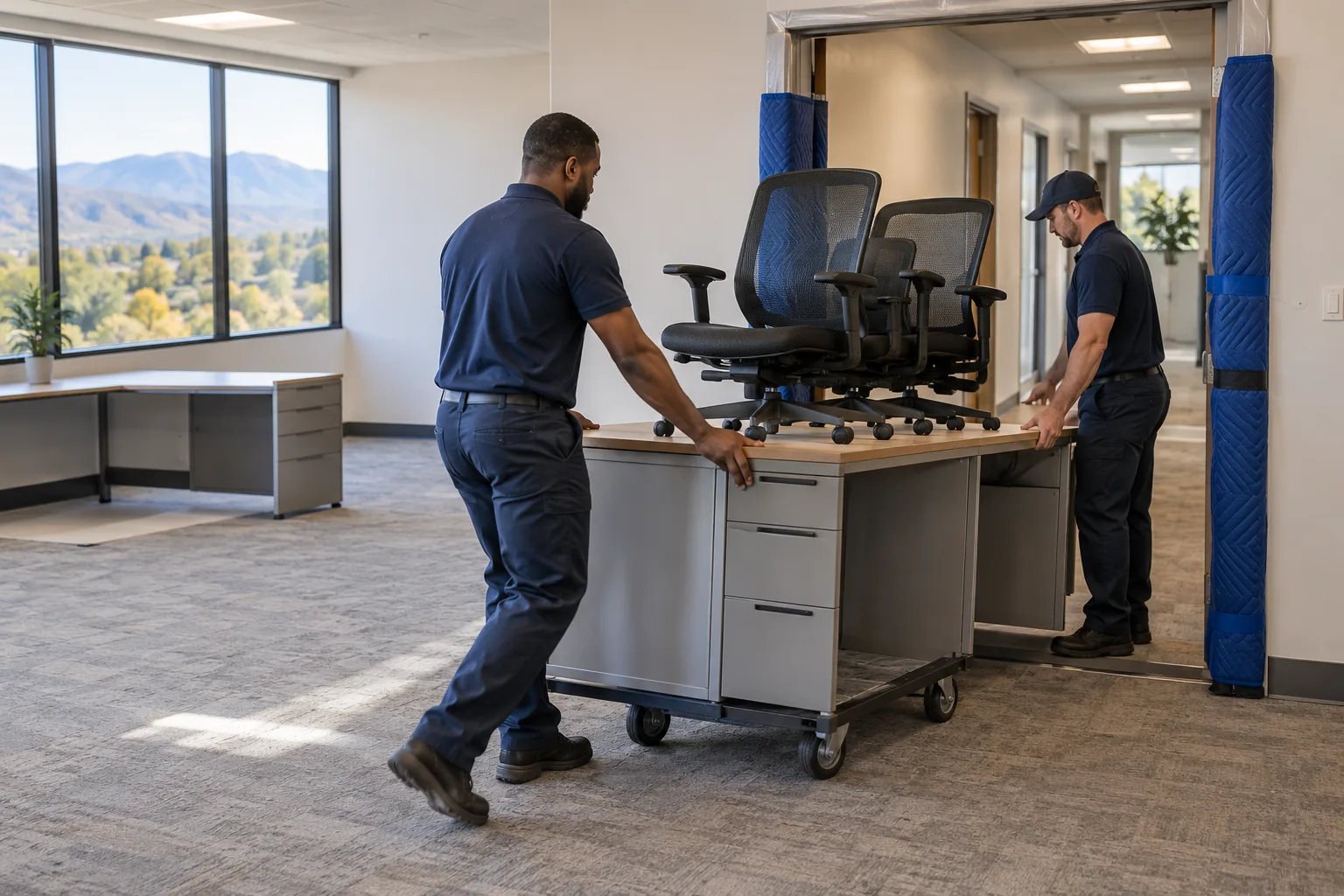
A practical checklist for inventory, disassembly, elevators, doorways, and loading access before office furniture leaves the building. Use the list below to make the first scope conversation specific.
Start with an item count
List desks, chairs, tables, cabinets, and modular pieces by room. Mark anything that stays. A count is more useful than “one office full” because it helps the crew judge volume and handling time.
Measure the awkward pieces
Measure the largest furniture, the narrowest doorway, and any elevator opening. Note whether desks or cubicles can be disassembled and who is authorized to do it.
Protect the route
Choose a path from the work area to the truck. Remove loose cables and floor obstacles, reserve an elevator if needed, and confirm where the vehicle may load.
Separate data-bearing equipment
Keep computers, drives, phones, and records out of the furniture pile until your data-handling plan is confirmed. Ordinary furniture removal does not replace secure data destruction.
Quick handoff table
| Tell the crew | Why it matters |
|---|---|
| Item types and counts | Defines volume and handling needs. |
| Floor, stairs, and elevator | Shapes labor and route planning. |
| Loading point and carry distance | Changes vehicle placement and timing. |
| Restricted or uncertain materials | Prevents unsafe or rejected loads. |
For service scope, see Office furniture removal. For a live project, gather the details above and prepare for an estimate.